Smart Transit for the Next Generation of Event-Goers.
Role
Collaboration
Duration
Team
PROJECT BRIEF
With 11 of Texas’ 20 most congested road segments located in the DFW metroplex and game-day traffic increasing crash rates by 133%, efficient event transportation has become a critical issue. This conceptual project reimagines SeatGeek’s platform to integrate automated shuttles, reducing car dependency while enhancing mobility for next-gen event-goers.
SITUATION
A region built for cars, not crowds.
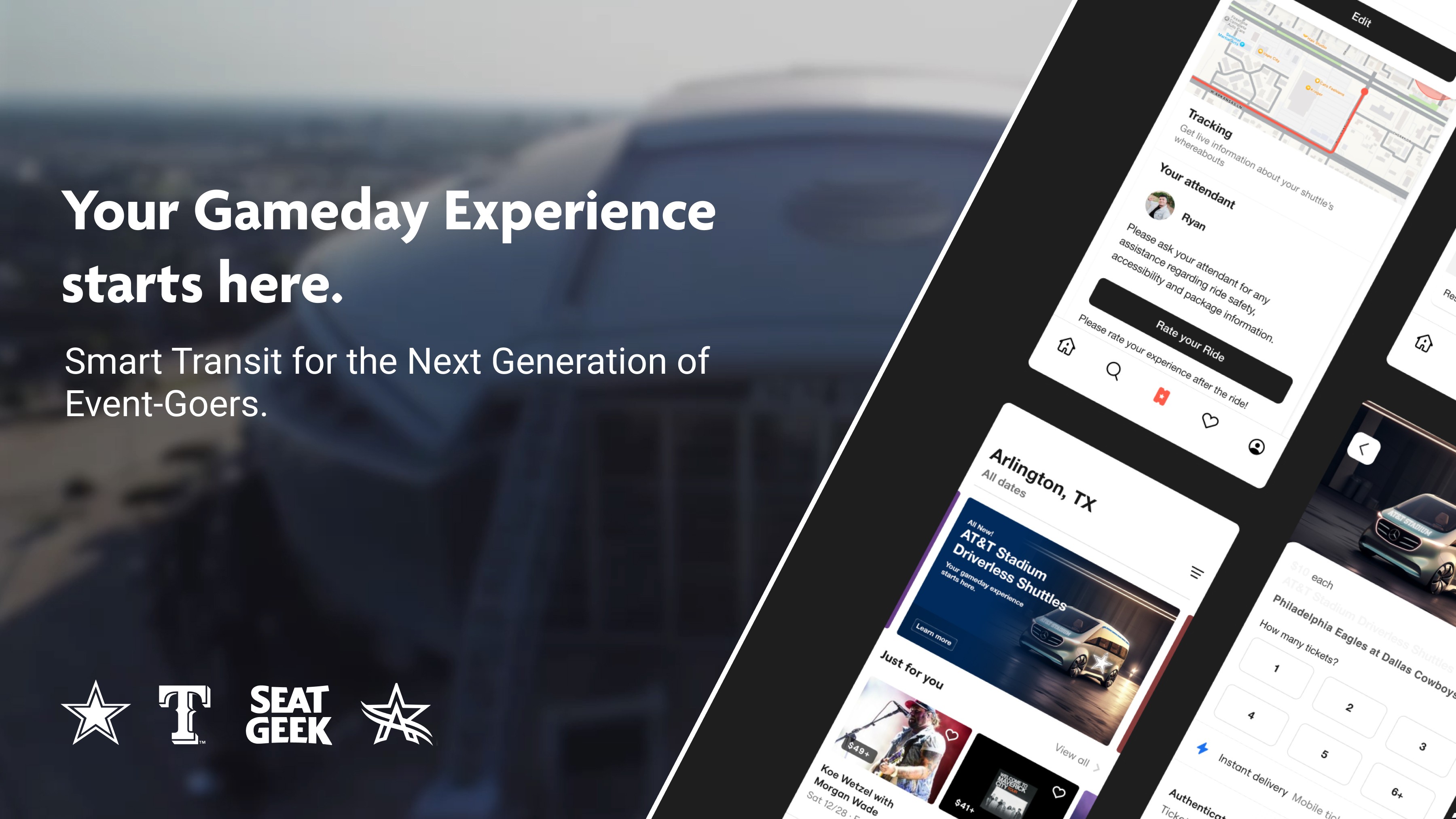
With DFW home to 11 of Texas’ 20 most congested road segments and game-day traffic increasing crash rates by 133%, efficient event transportation has become a pressing challenge. This conceptual SeatGeek project explores integrating automated shuttles to reduce car dependency and improve the event goer experience.
TASK
User-centered approach to seamless shuttle access through the app.
Our challenge was to explore how SeatGeek could offer a smarter, more unified transit experience for event goers through conceptual design. We aimed to identify key entry points, reimagine the app’s information architecture, and prototype an integrated system for shuttle ticketing and real-time updates.
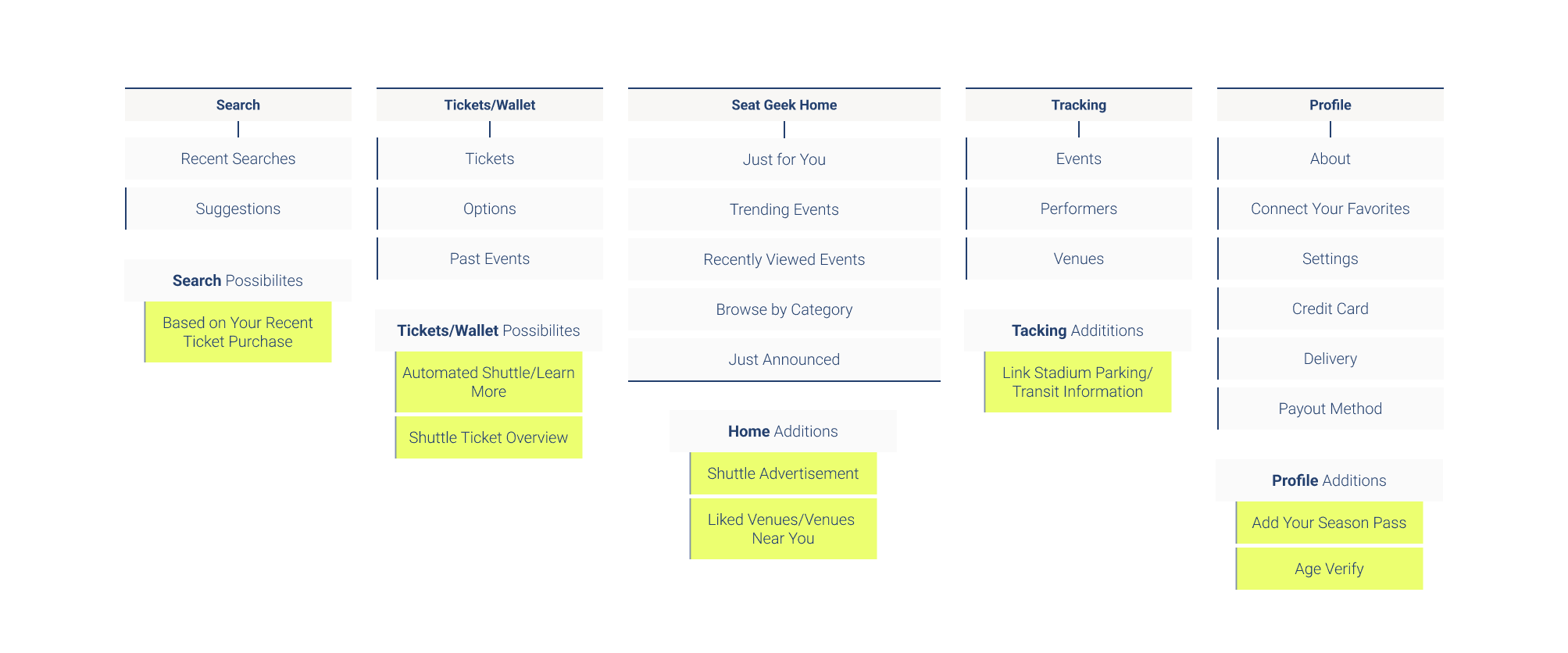
Highlighted selections represent high traffic in-app areas that were best suited to place shuttle access entry points to provide a streamlined experience for users.
ACTION
Transforming how fans travel with SeatGeek
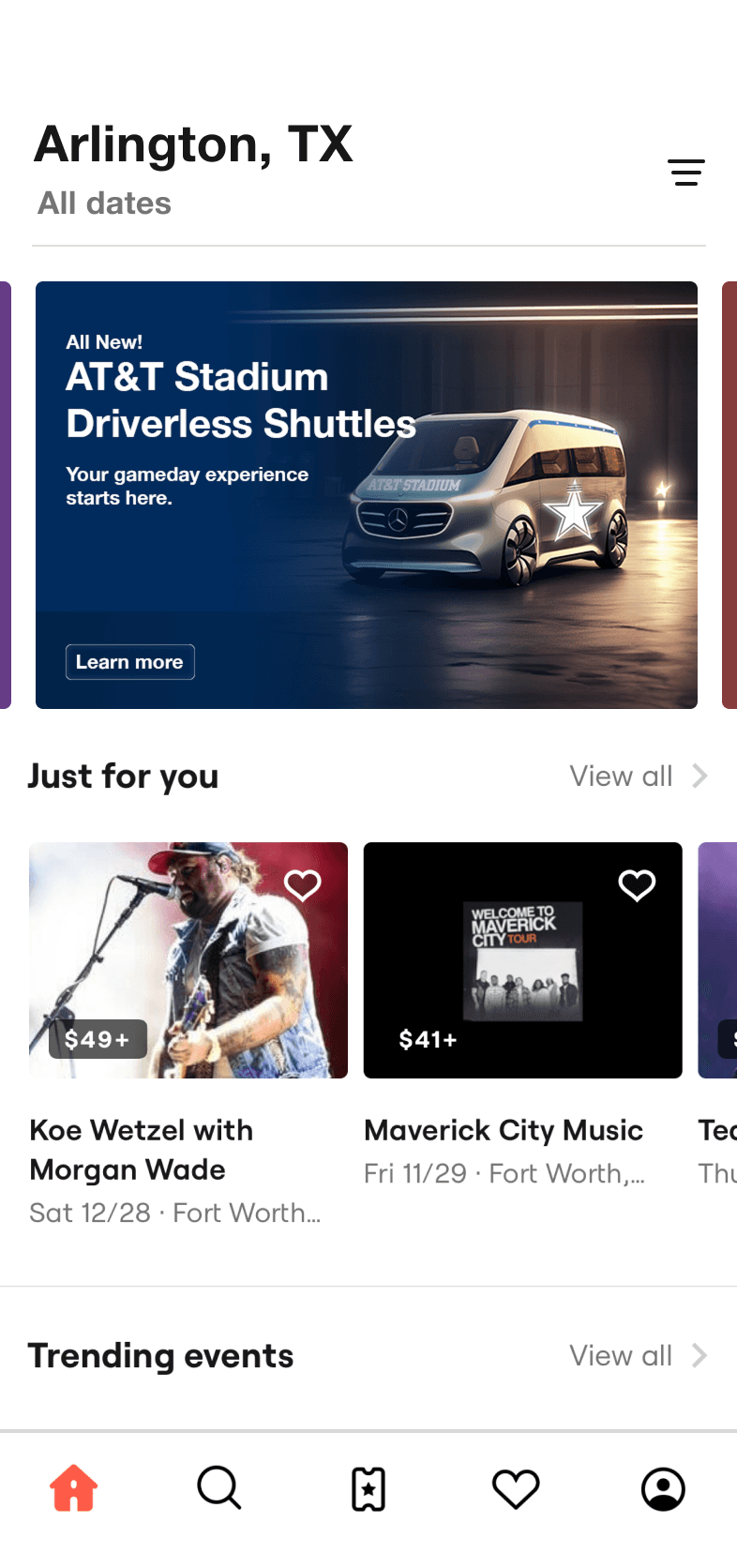
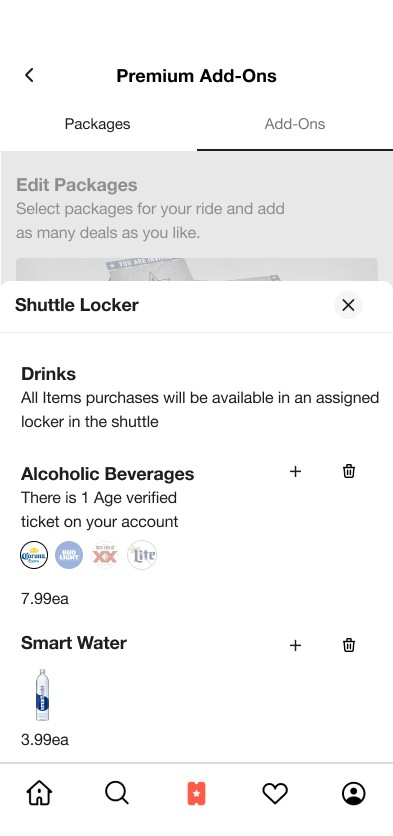
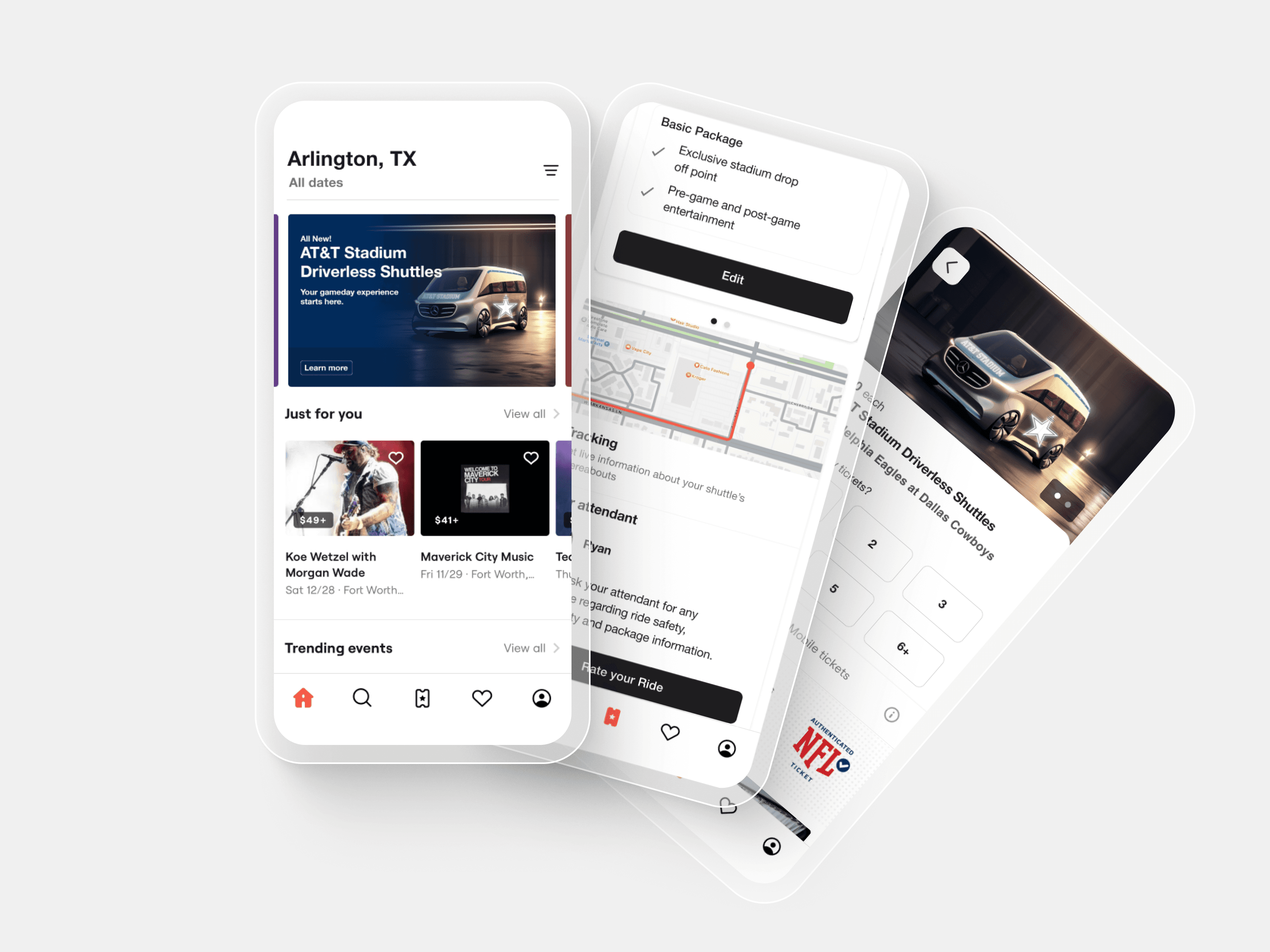
We redesigned the Tickets/Wallet page to surface shuttle access and introduced entry points to ordering stadium shuttles across high-traffic areas like the home page, liked venues, and purchase confirmation flows. To support these changes, we proposed real-time updates, seasonal passes, and in-app promotions to ensure shuttles felt like a natural part of the SeatGeek experience.
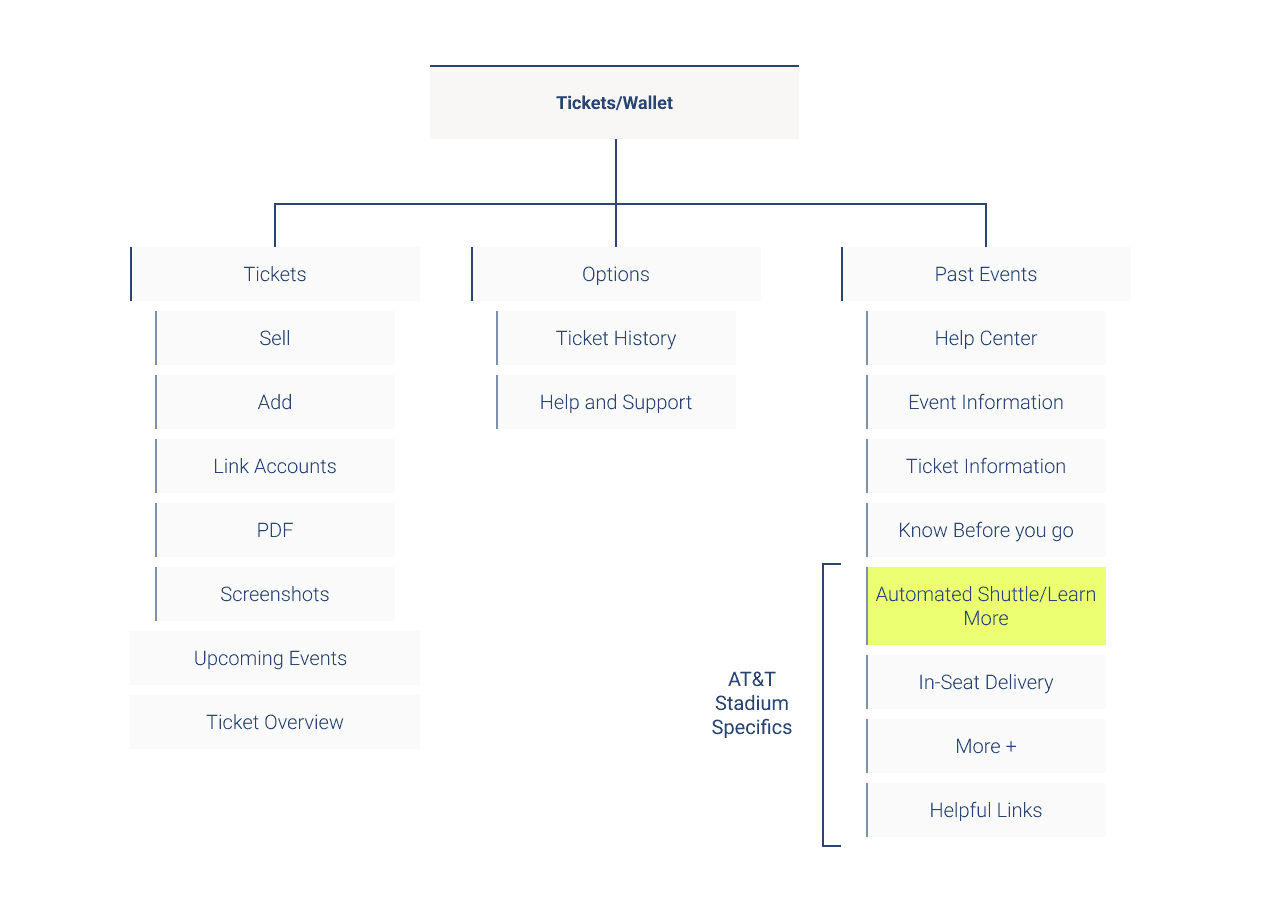
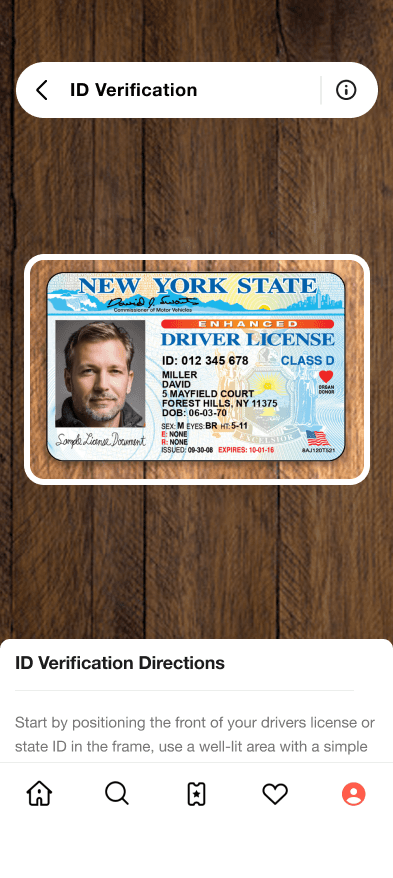
Feature Unlock Age Verification
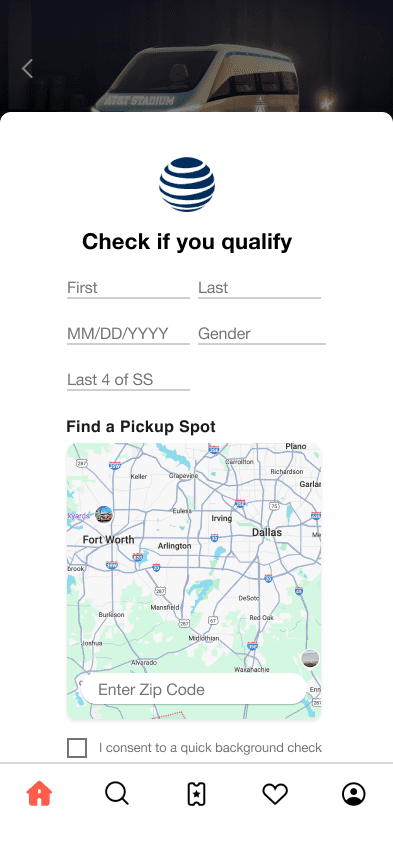
Check if your area is Serviceable.
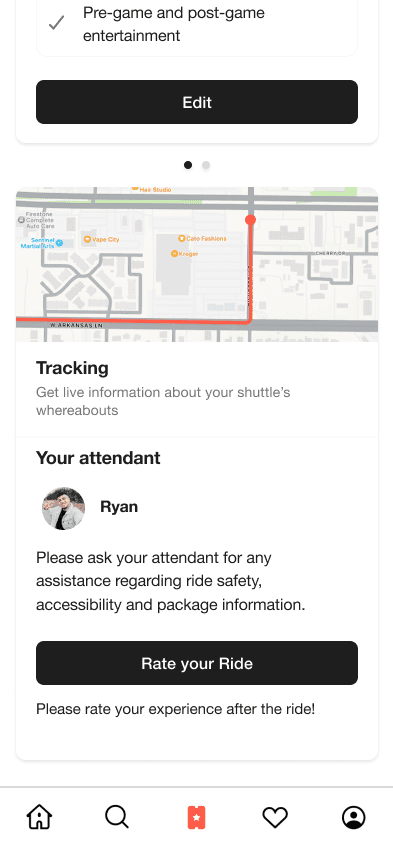
Access All info about your Shuttle.
Shuttle module to provide user access.
Premium ride add-ons for users to order.
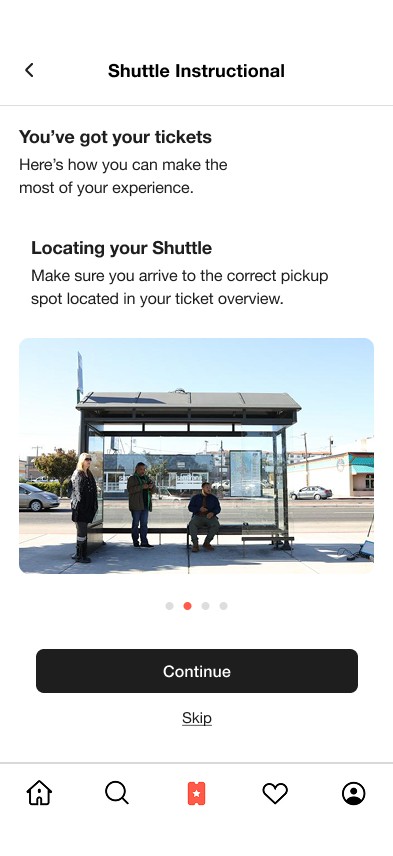
Step by step shuttle guide for new riders.
TESTING
User testing validated seamless shuttle integration.
User #3
“Buying tickets was very smooth. It’s clear and easy to navigate.”
User #6
“The shuttle ads are missing important bolded information”
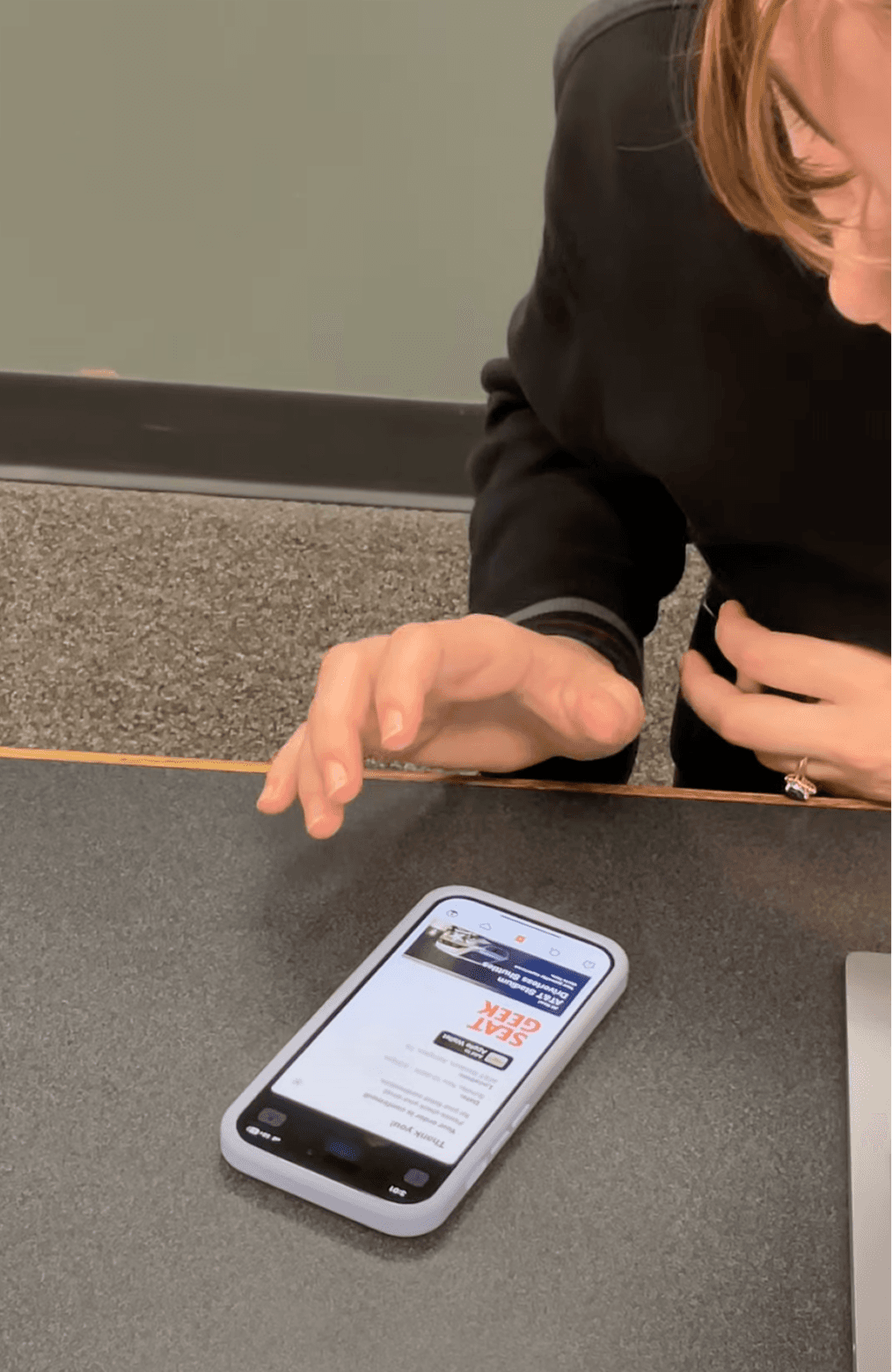
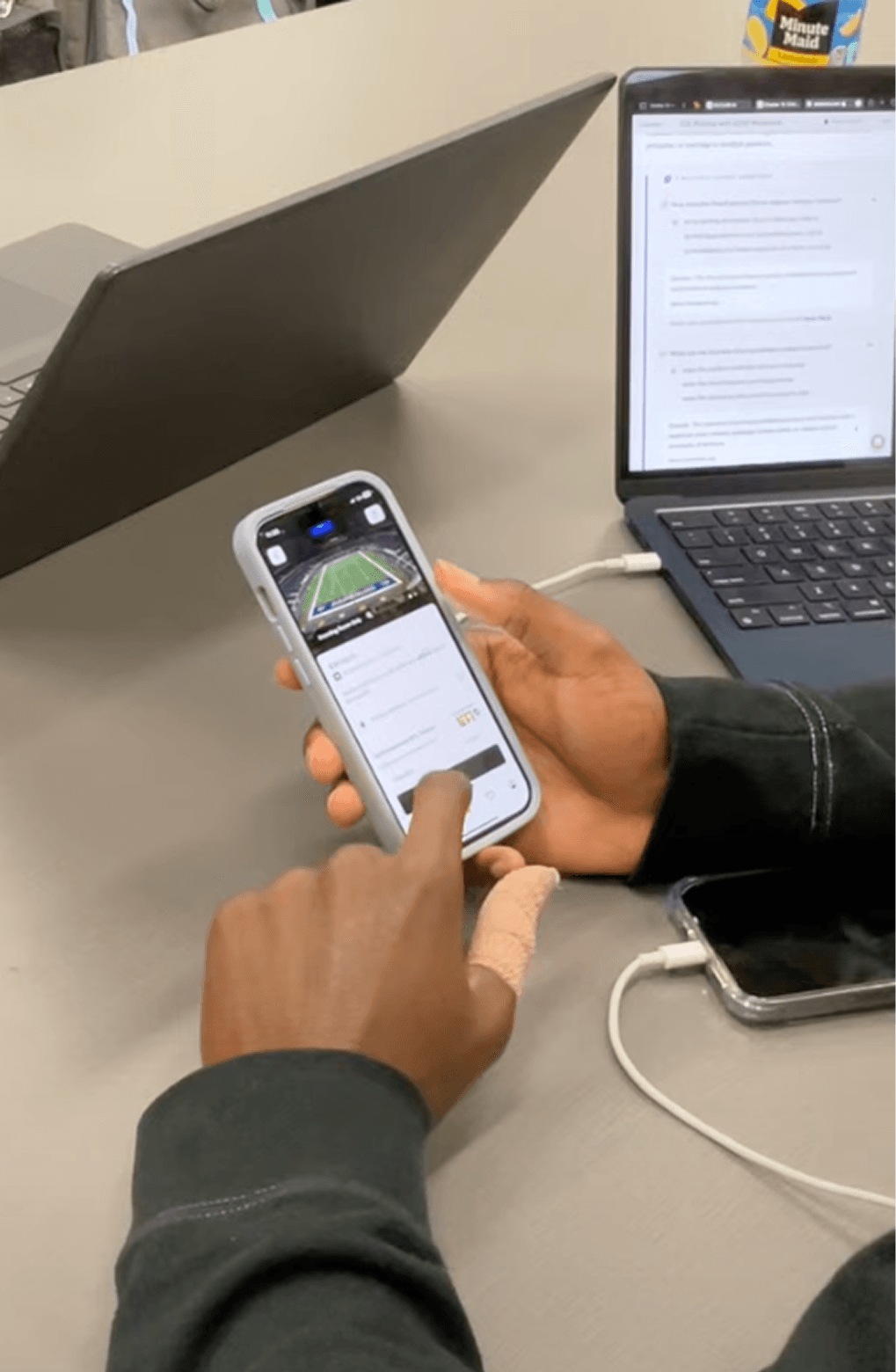
Participants confirmed that ticket purchasing remained intuitive and uninterrupted, consistent with the original SeatGeek experience. Feedback also praised the personalized shuttle ads and overall clarity of navigation, affirming our design’s cohesion and minimal disruption to existing user flows.
CONSTRAINTS
As the team lead, I was responsible for balancing competing priorities, such as ensuring seamless integration with the SeatGeek platform while keeping the solution scalable for various events and venues.
A key constraint was maintaining a user-friendly experience, despite the technical complexity of combining event ticketing and shuttle services into a single system.
RESULTS
Impact, scalability, and a future sight design.
The integrated shuttle solution for SeatGeek has the potential to significantly improve user experience by reducing friction and enhancing scalability for a variety of events.
Scalable Integration: The solution can be expanded across various cities and major event venues, providing a unified platform for event ticketing and automated shuttle services.
Increased User Retention: By reducing friction and streamlining the shuttle booking process within the SeatGeek platform, user retention during events could increase by 20%.
Traffic and Congestion Reduction: Integration of shuttles with event ticketing can lead to up to a 15% reduction in traffic congestion around major events.
Customer Satisfaction: The seamless experience could boost customer satisfaction by providing faster, more efficient transportation options for event-goers.
Seamless Integration:
Future Growth Potential: This solution is adaptable for a wide range of events, including sports, concerts, and festivals, increasing SeatGeek's service offerings and overall engagement.
See the Prototype!
RELATED PROJECTS