Revolutionizing Organ Delivery with Drones: Reducing Organ Waste and Saving Lives for Transplant Patients.
Role
Collaboration
Duration
Team
PROJECT BRIEF
About 26,000 donated organs are discarded a year due to a lack of coordination between hospitals and organ procurement organizations (OPOs) and increasing delivery times and costs.
PROBLEM STATEMENT
The never ending wait for
life-saving care.
Despite living in an era where healthcare is more accessible than ever, over 104,234 people are currently on the organ transplant wait list, with this number growing every 10 minutes. Many face wait times of up to 10 years for life-saving care.
About 26,000 of harvested organs are discarded, while 16 people die daily waiting for the transplant that could save their lives."
RESEARCH
104,234 people are awaiting an organ match.
5,840 of them will die before the end of the year.
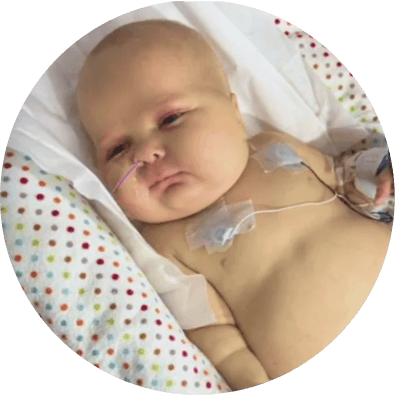
People like Bennie,
who died at 9 months old.
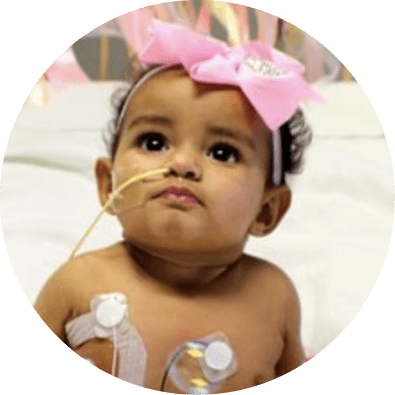
People like Raylee,
who died at 14 months old.
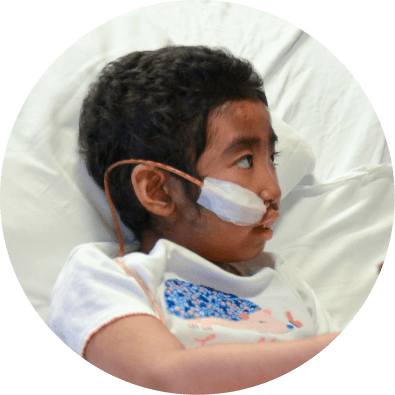
People like Marco,
who died at 6 years old.
GOAL
As the UX Designer for Talaria, my goal was to create an intuitive and seamless interface that optimized real-time tracking, streamlined logistics, and improved communication between hospitals and transport teams. The objective was to enhance visibility into organ transportation, reduce delivery delays, and ensure a reliable and life-saving service through a well-structured user experience.
DISCOVERY
Mapping Challenges, Measuring Time, and Validating Feasibility.
Uncovering gaps in organ transportation through system analysis, time and cost evaluation, and expert insights.
Through system mapping, transportation analysis, and expert interviews, we:
Identified inefficiencies in the existing UNOS system.
Highlighted logistical challenges from procurement to delivery.
Compared transportation methods based on time and cost.
Validated the feasibility of drone-based organ delivery with industry professionals.
Mapping the Complexity of Organ Transport.
The organ procurement process involves multiple stakeholders, but lack of coordination and standardized protocols hinders efficiency, especially in transportation. Despite oversight from UNOS and OPOs, variability in logistics causes delays, impacting patient outcomes.
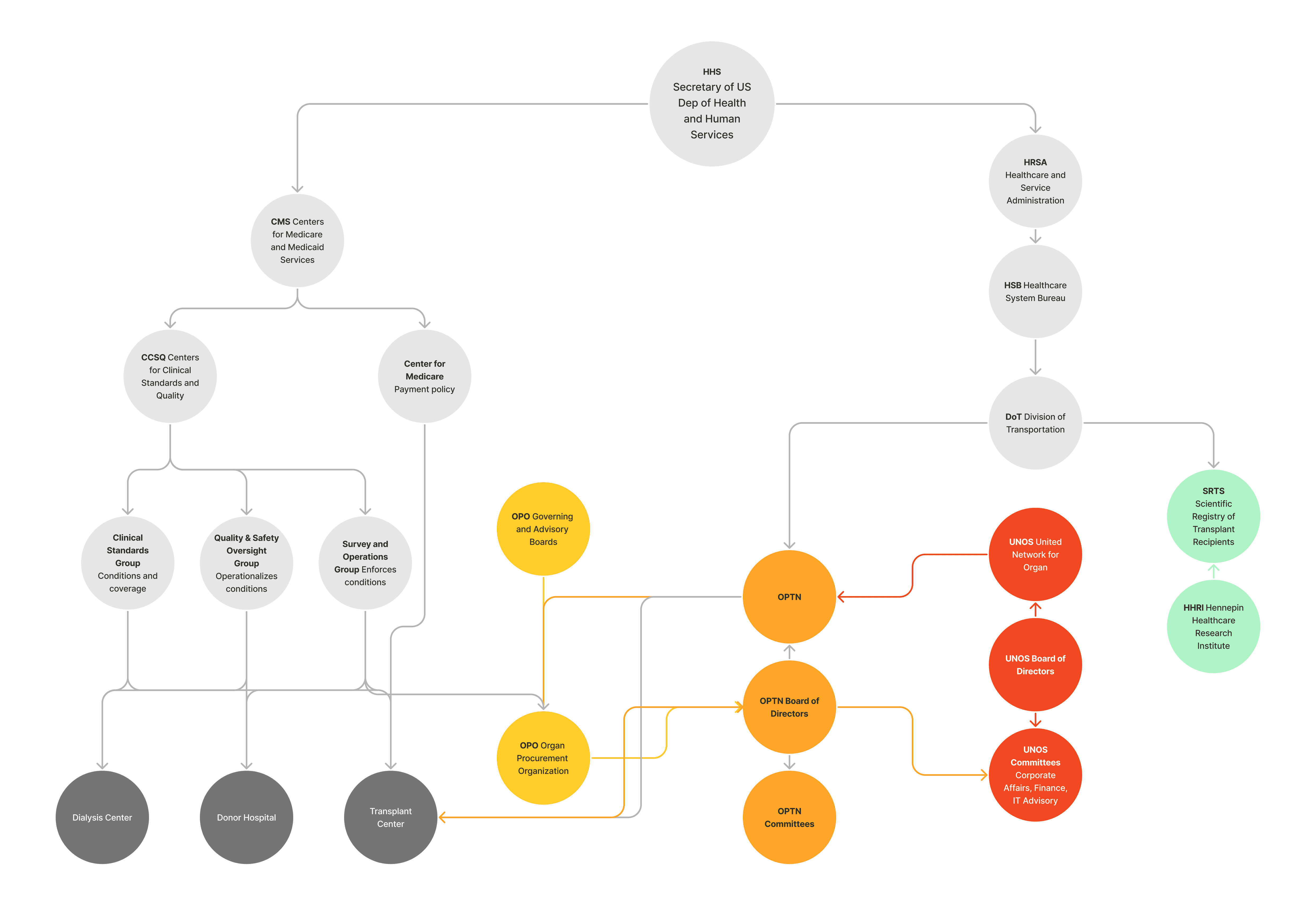
In short we discovered that this is what the current organ donation system looks like.
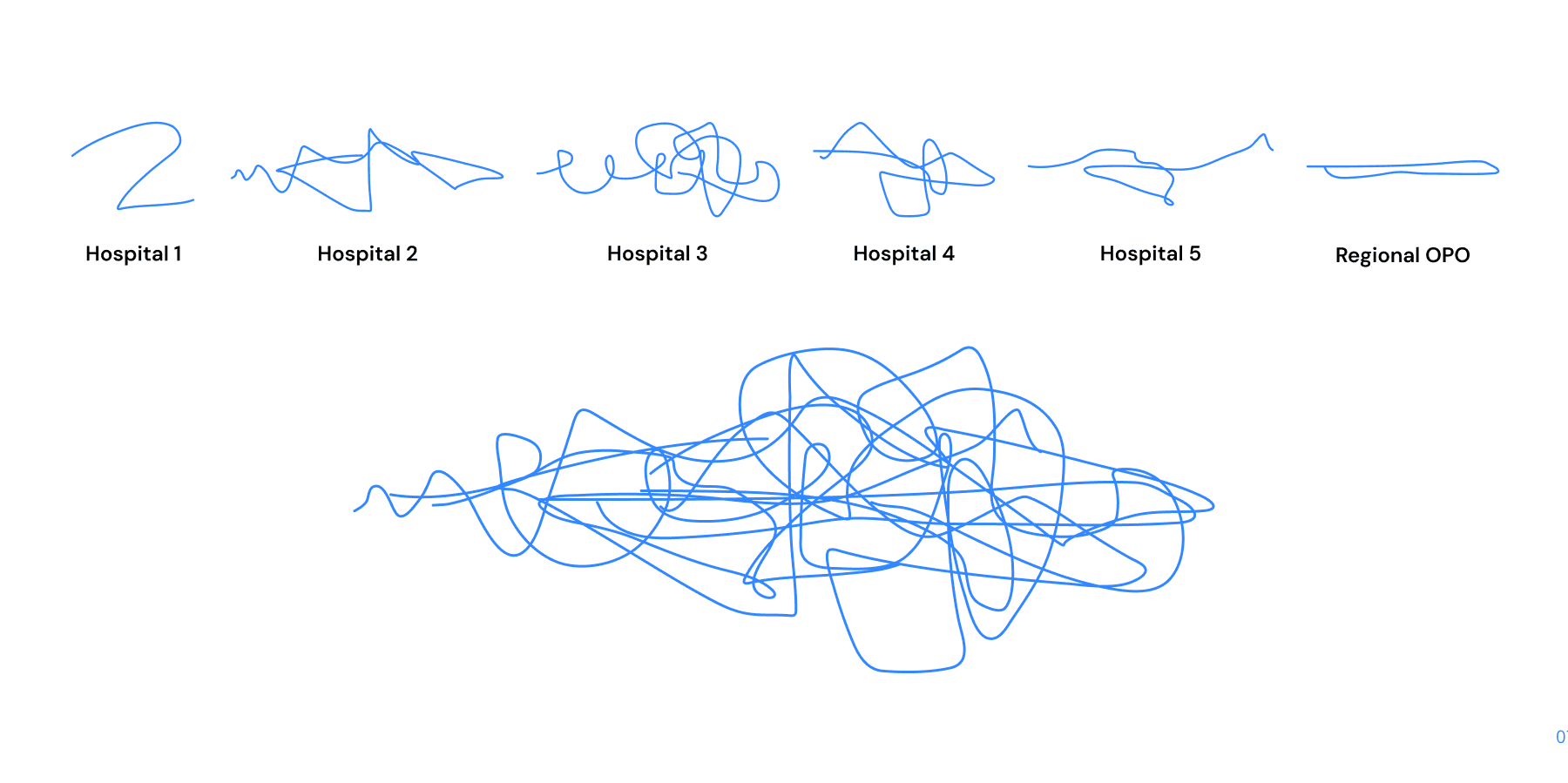
The reality of the organ donation system highlights dissimilarities between hospitals that cause a lack of coordination, miscommunications, and delay the delivery of the organ.
Highlighted logistical challenges from procurement to delivery.
We identified an opportunity to integrate drones into the existing transportation network, not as a replacement for ground or air transport, but as a complementary solution to improve speed and efficiency in critical stages of organ delivery.
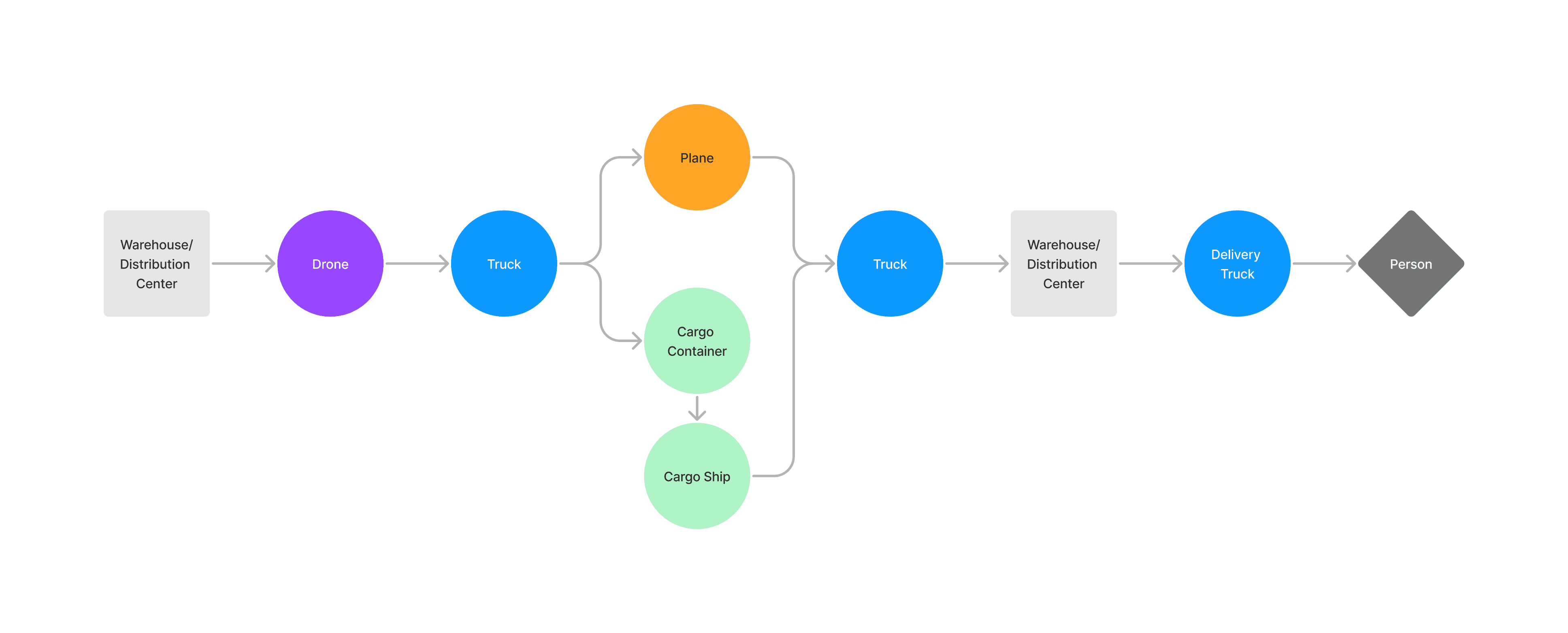
Measuring Time and Cost Across Transport Methods.
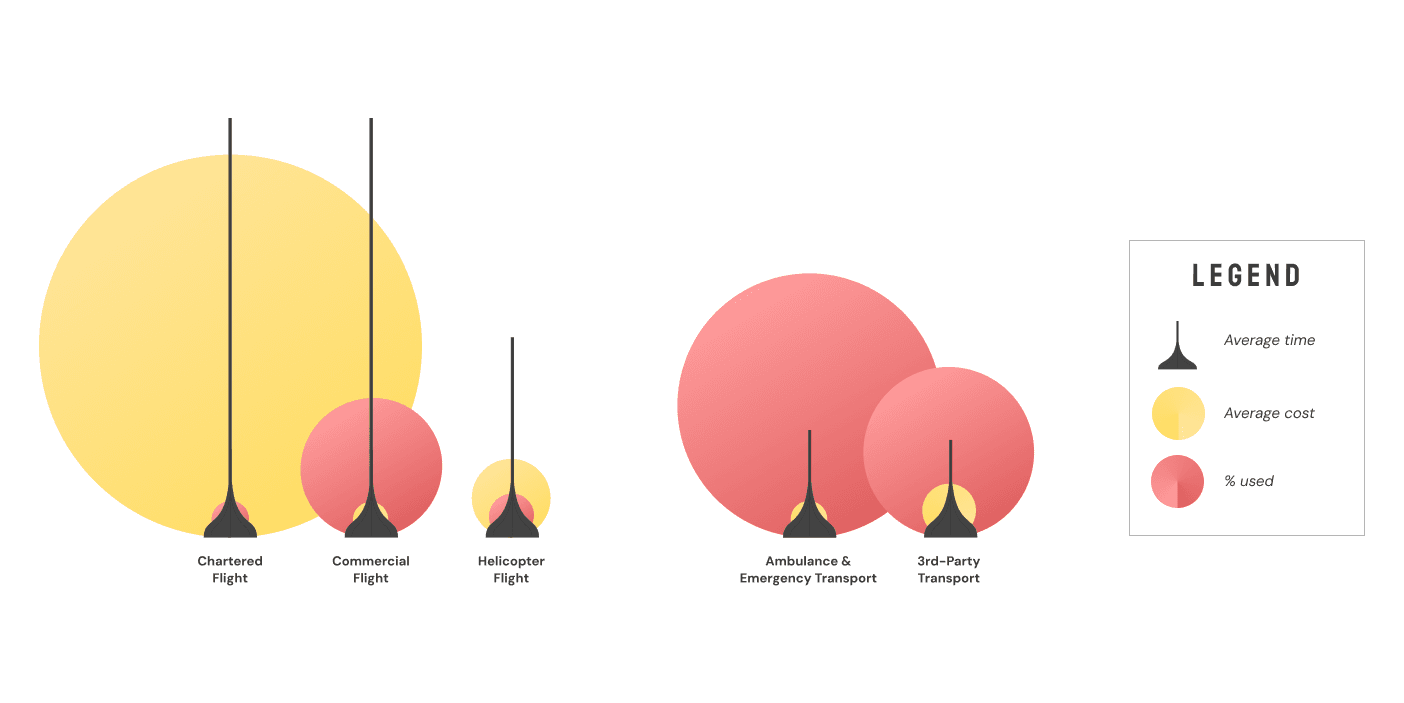
Time and cost define the success of organ transportation, yet every method has trade-offs. Air travel is fast but expensive, while ground transport is affordable but unreliable. Our analysis of commercial airlines, ground transport, and drones pinpointed where drones could provide a faster, more cost-effective alternative.
Validating Feasibility with Industry Experts.
"OPO doctors no longer need to accompany organs during transport, making UAVs a viable option for organ transport."
— Communications at Southwest Transplant Alliance, Mary
In order to ensure the feasibility of our solution and grasp concerns we might have otherwise overlooked, we moved the conversation to healthcare , OPO, and drone delivery professionals.
Validating drone delivery feasibility.
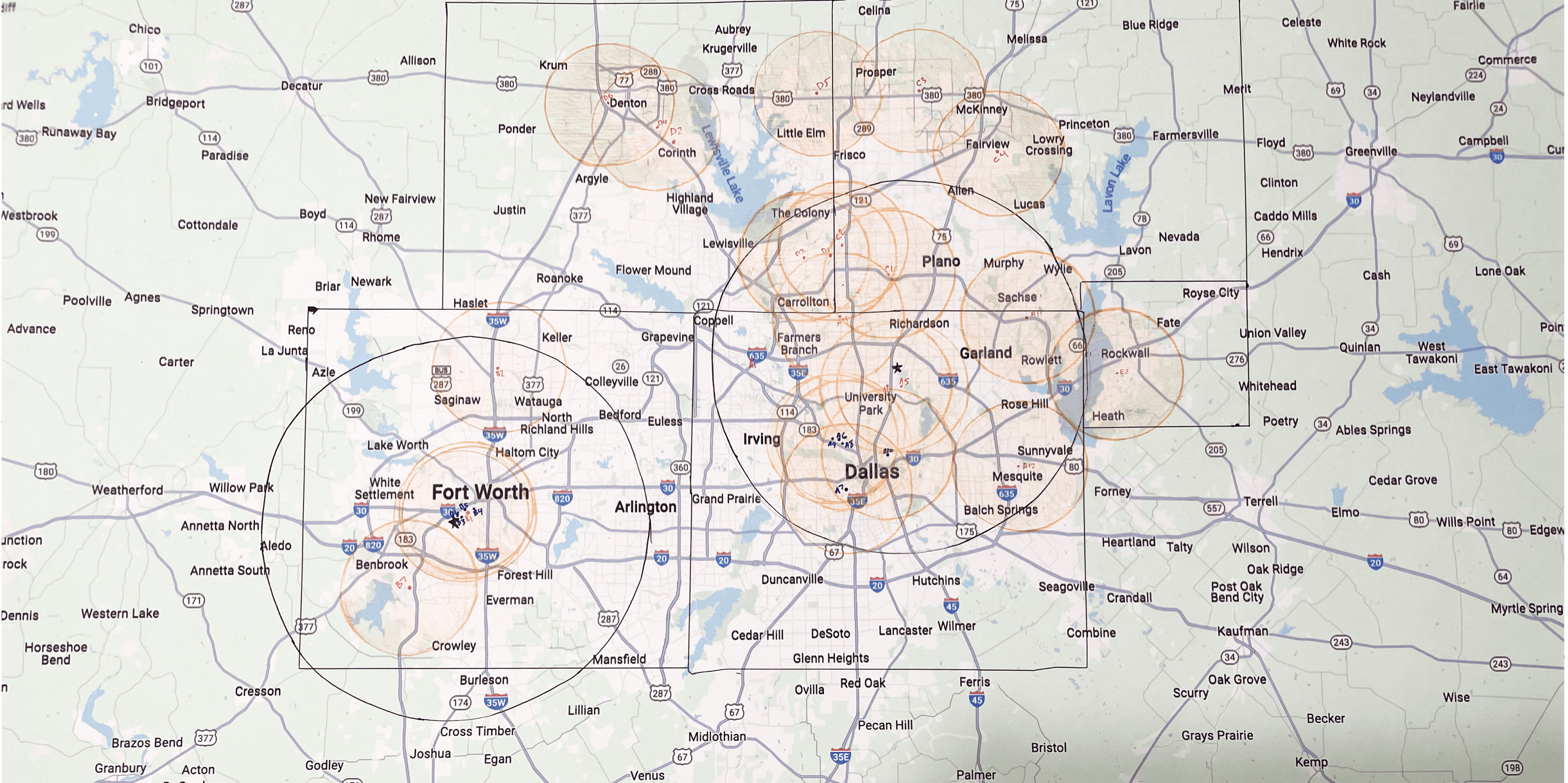
5 Mile Drone Radius – Dallas, TX
Hospitals/Surgery Centers and OPO
The ranges that we used represent the minimally viable range of 5 miles and the minimally desired range of at least 15 miles. We expect for drone range to substantially increase, opening the door for drones to expand farther into the urban-rural spectrum.
APPROACH
Introducing Talaria
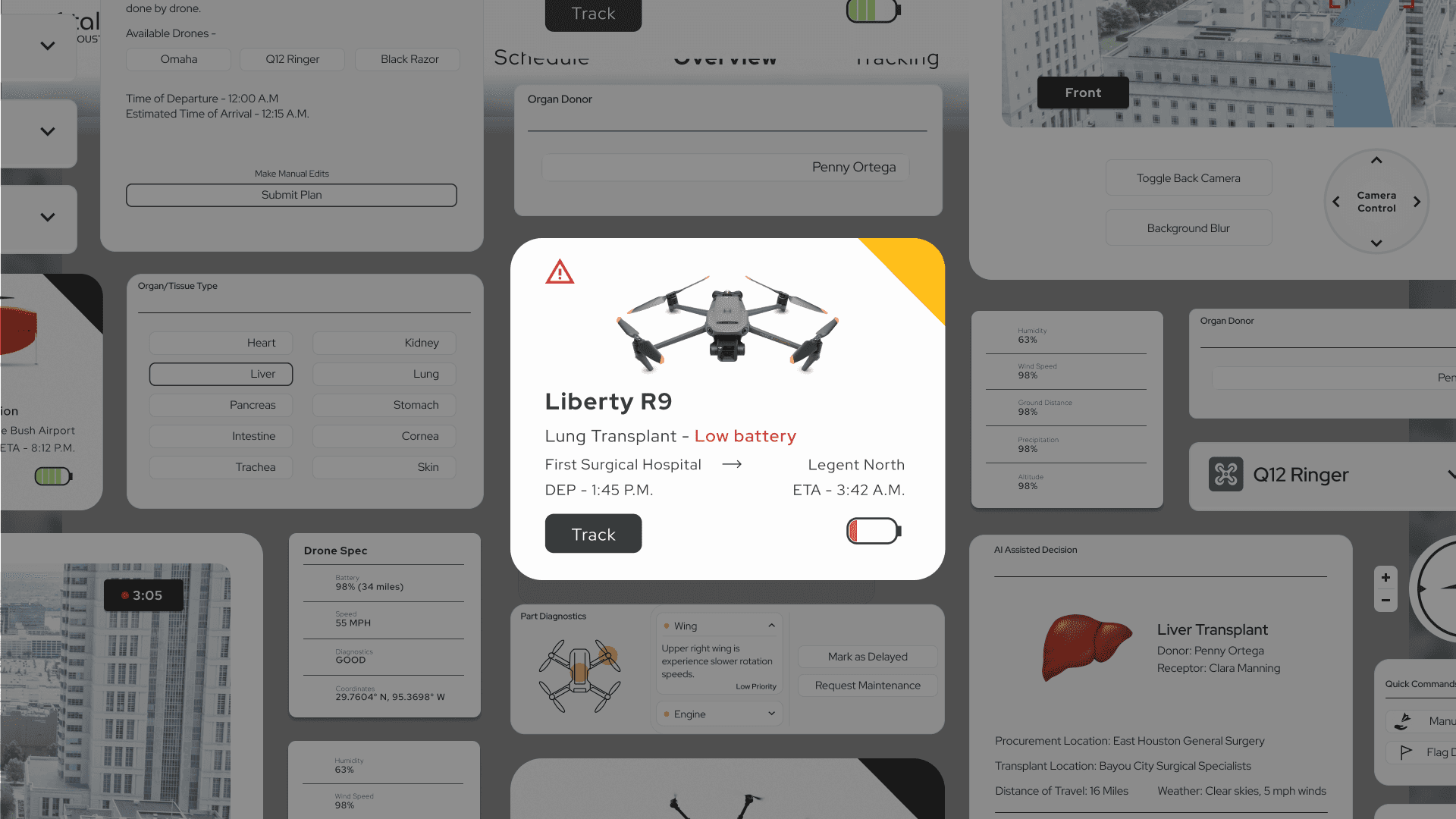
A desktop application for drone operators to efficiently manage organ drone delivery to hospitals and patients.
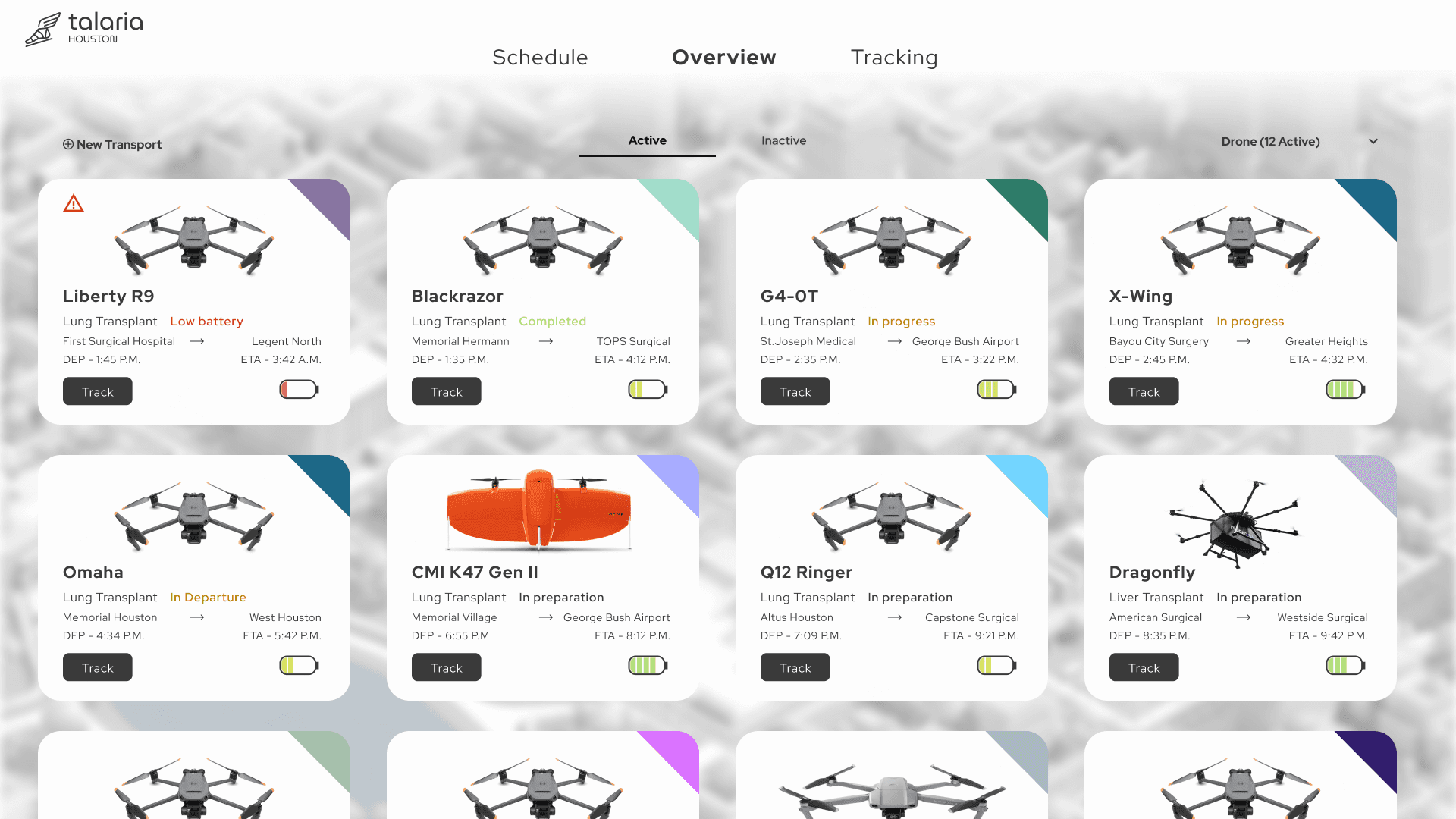
ACTIVE TRANSPORTATION DASHBOARD
Quick glance overview of active and inactive drones for operators.
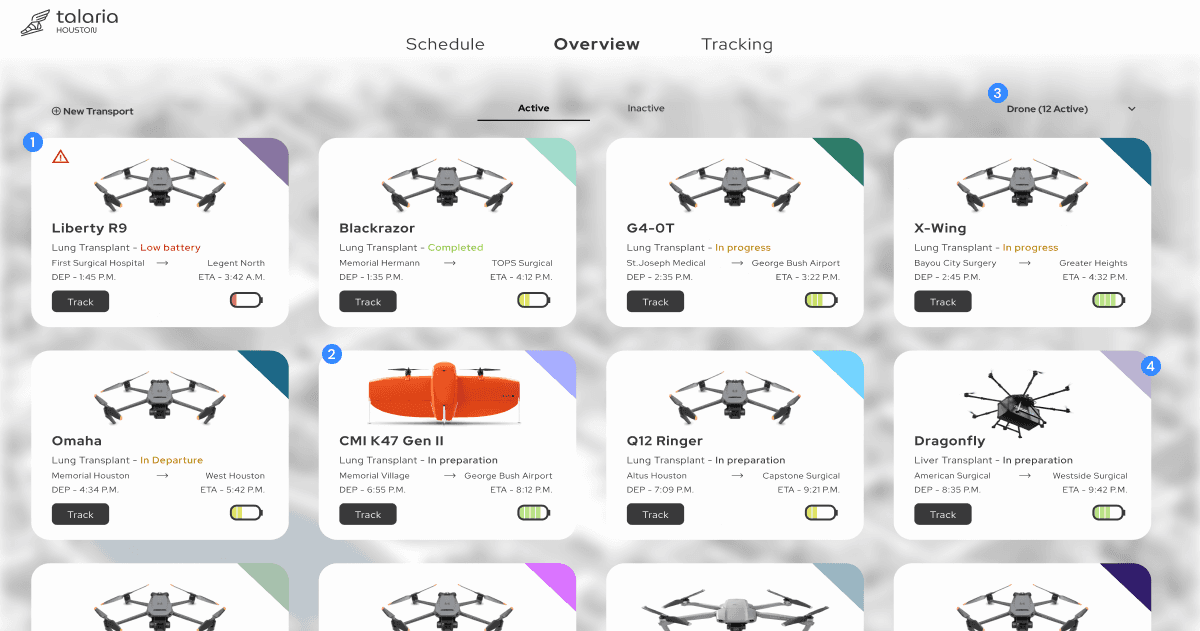
1
Prioritized alerts at the top of drone operator llistings.
2
Drone info taps for operator to review department times, eta's battery life and current delivery status.
3
Multiple transportation type view, allowing operators to manage all types of delivery vehicles including helicopters, drones, planes, and emergency vehicles.
4
Differently colored tabs to easily identify specific drone trips and transport.
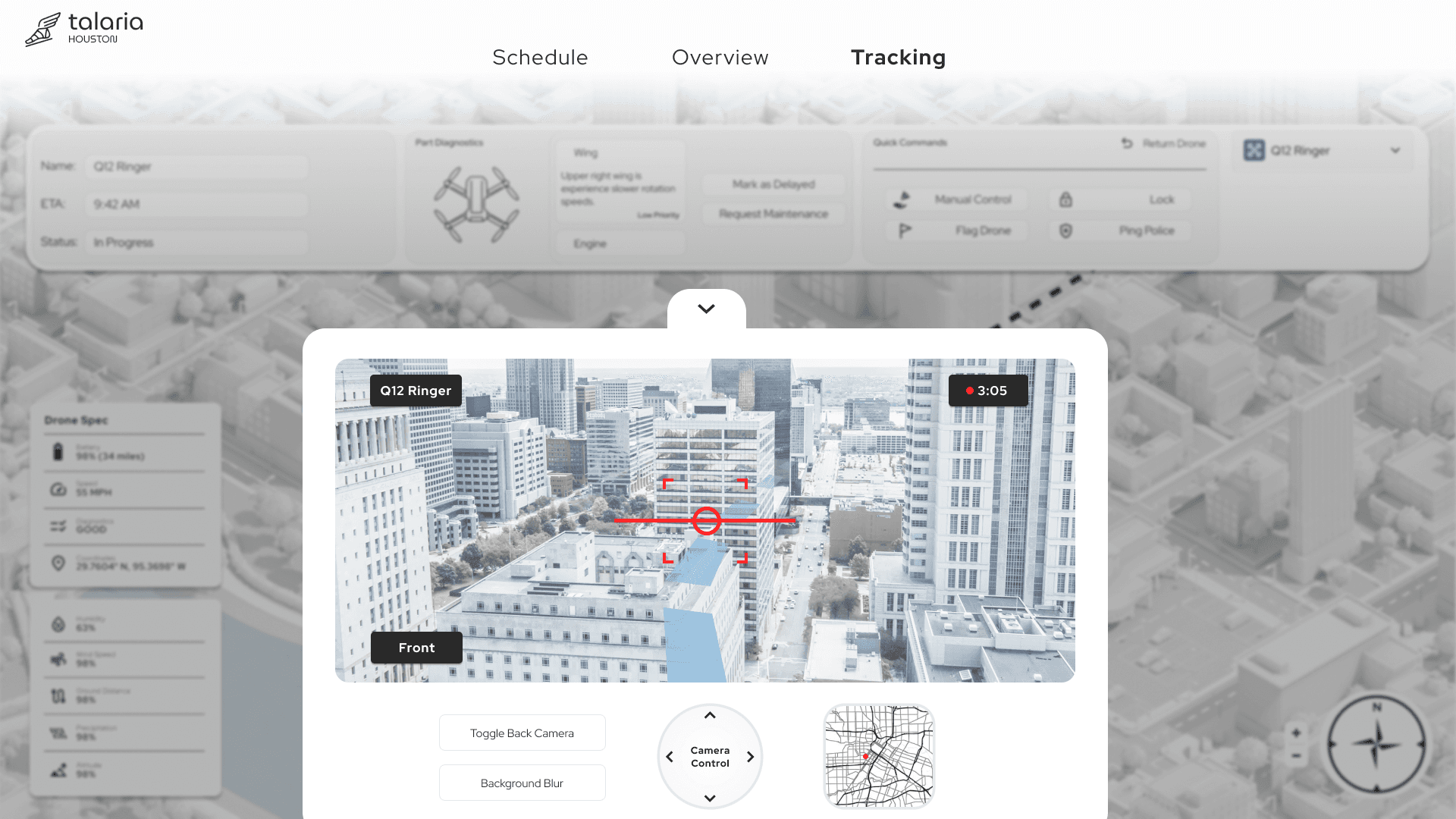
DRONE MANAGEMENT
Drone tracking availability all the way from point A to point B.
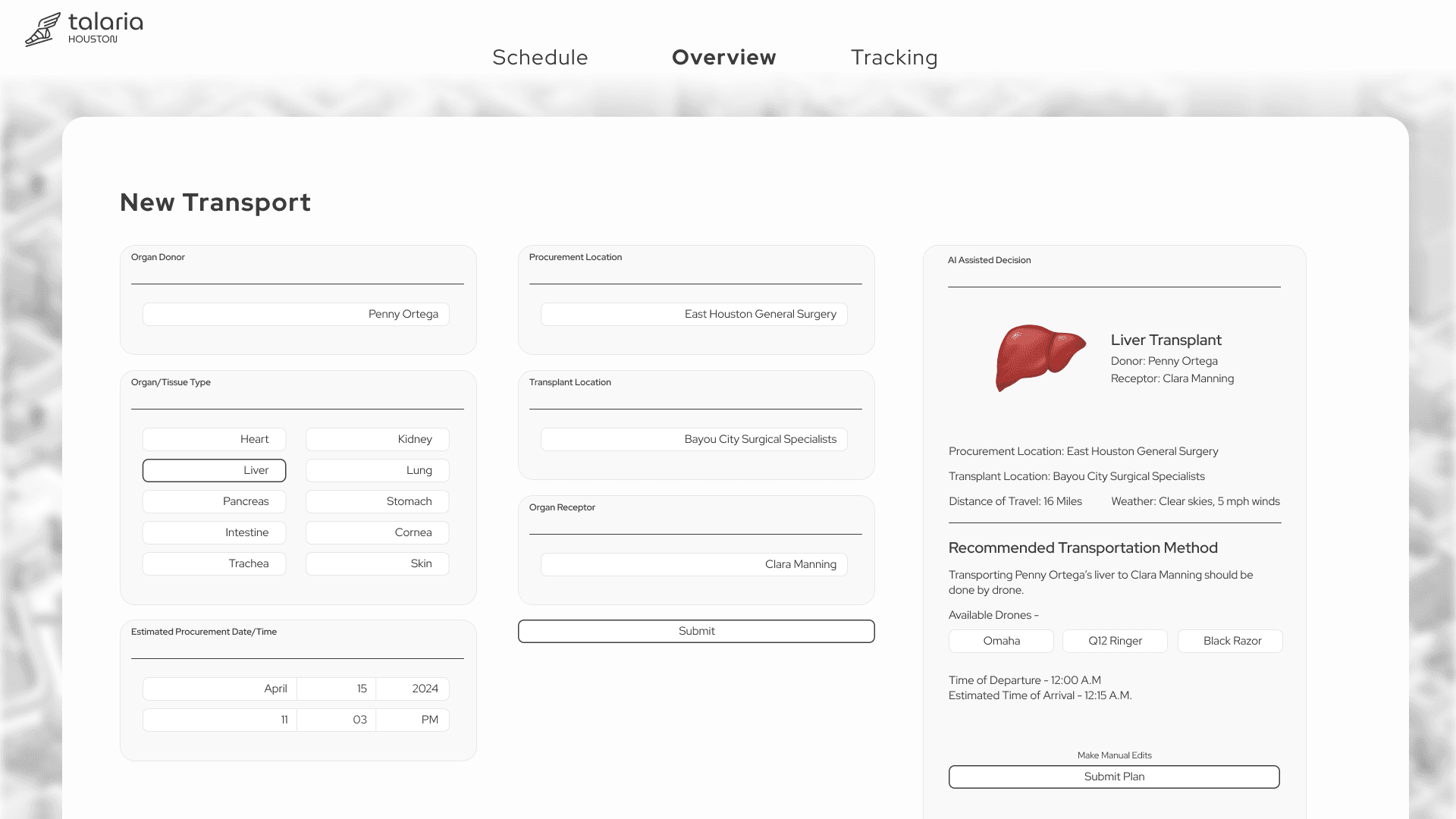
AI ASSISTED DECISION MAKING
Drone operators can make emergency decisions using AI assisted decision making on what to do for each delivery dispatch. Assisting the organ delivery operator in…
Calculating time and money that will be spent on each type of transport, and what method will be best for the patient and the hospital.
Effectively understand what specific organs can and cannot be delivered by drone.
Efficiently help the operator identify strengths and threats for each delivery type.
CONSTRAINTS
Embracing new disciplines to design speculative yet, practical and impactful solutions.
To bridge gaps in my understanding of unfamiliar field, we mapped the UNOS system journey, analyzing hospital locations and OPO distances to uncover inefficiencies. Conversations with medical and logistics professionals provided critical insights into real-world delays and regulatory constraints. This research grounded our speculative drone solution in practical data, ensuring both feasibility and impact.
LASTING IMPACT
Intended Impact: Transforming Organ Transport Efficiency with Drones.
Reduced transport times – Targeting a 30-50% decrease in delivery duration for short to mid-range distances.
Lower operational costs – Goal to reduce per-transport expenses by up to 60% compared to chartered flights.
Enhanced accessibility – Bridging first- and last-mile transport gaps to ensure seamless delivery.
Increased organ utilization – Minimizing delays to prevent unnecessary organ waste.
Check out the Prototype!
Try Talaria
RELATED PROJECTS